
You know that time is precious to me, which is why I decided to structure this monthly letter as follows: a retrospective on the past month, an encounter with a creative mind, a taste sensation, a reflection to open up new horizons, an enlightening read, and a place where the values of hospitality are those that I love and cherish. TOMO is not just a newsletter. It is a companion that transforms readers’ time into something precious and unexpected.
To find previous editions and receive future ones, click HERE.

#20
Pioneer of time,
sower of emotions

November 13th, 2026
Dear readers,
I’ve never been particularly fond of celebrating professional milestones, but I have to admit that some numbers mean more than others. In 2027, Dar Ahlam will turn twenty-five. An opportunity to look back and realise that some of the ideas that seemed a little mad at the time turned out to be right after all. For me, this anniversary will be a chance to thank everyone who placed their trust in us. Because if Dar Ahlam is still here after all these years, it is above all thanks to the teams and the people who have brought it to life.
That said, I have no desire to spend this anniversary looking backwards. My understanding of hospitality has changed enormously over the years, and I’ve learnt as much from my mistakes as from my successes. I’m no longer the person I was ten or fifteen years ago (thank goodness!), and that’s precisely what I love about hospitality. We’re working with something living and constantly evolving, shaped by our guests’ expectations and our own convictions, in an ongoing exchange of ideas, experiences and knowledge. In fact, I suspect that in the years ahead, passing on what we’ve learnt will become increasingly important, perhaps even more so than creating something new.
One of the moments I’m most looking forward to in 2027 is a dinner deep in the M’Goun Gorges, which our guests will reach by walking upstream along a riverbed. We’re currently busy restoring a number of old, abandoned houses, and I think it’s going to be quite extraordinary… There’s also Muusiiqaa, our musical residency, which welcomes new artists every month. And a secret room, hidden somewhere within Dar Ahlam, which I’ve had an enormous amount of fun dreaming up. I have no idea yet what will come out of these places, these moments or these encounters. And that’s exactly what I find so exciting.
Warmly,
Thierry
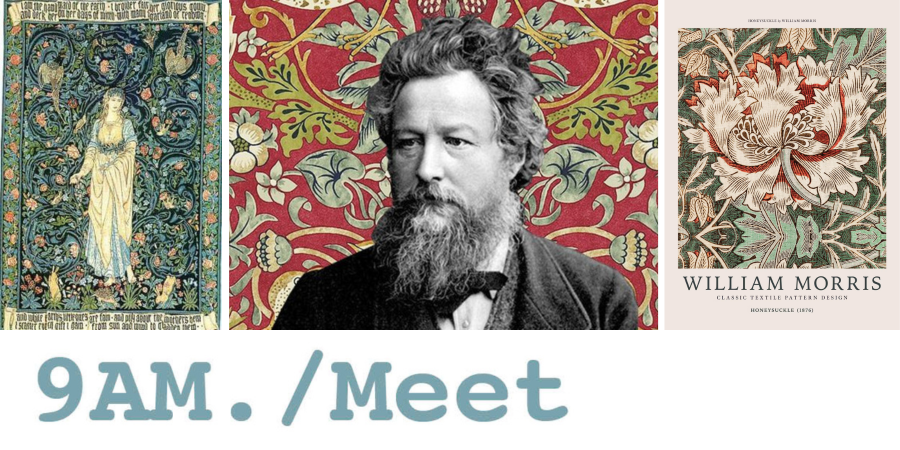
I’ve always admired people who refuse to be confined to a single discipline, and the man I want to introduce you to this month was certainly one of them. Born in 1834, William Morris was a textile designer, printer, writer, poet, lecturer, painter, draughtsman… But above all, he believed that beauty should be present in every object we surround ourselves with. Whether a piece of furniture, a wallpaper or a book, everything should contribute to a kind of overall harmony, with a little poetry woven in. He championed craftsmanship against the standardisation and mass production that, in his view, were making the objects around us increasingly ugly. I dread to think what he would make of our world today!
He was clearly ahead of his time, and his thinking went far beyond aesthetics. For William Morris, beauty wasn’t a privilege reserved for those who could afford it, but a right almost as fundamental as being able to buy a loaf of bread. I love the idea that beauty is a genuinely political and human concern. We tend to treat it as something secondary, a finishing touch to be added once everything else is taken care of. I believe the exact opposite: it should be at the very heart of our lives.
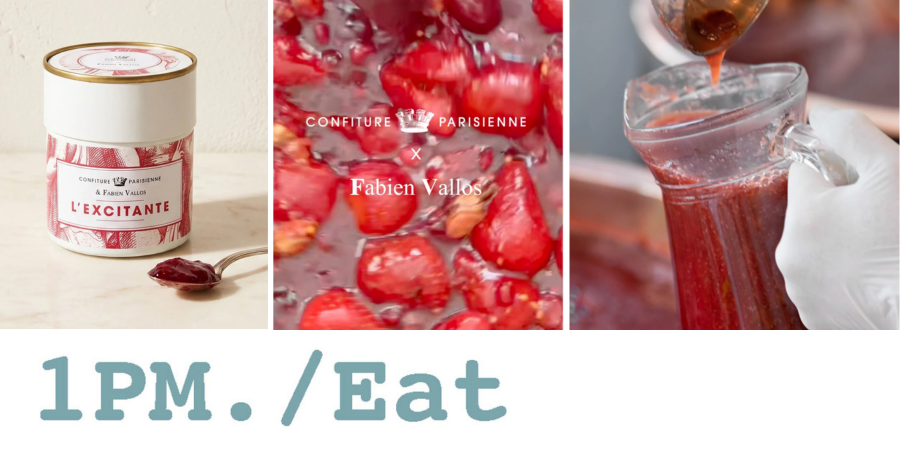
What intrigues me most about the jam I want to tell you about is that I haven’t actually tasted it yet! This confiture excitante, created by Fabien Vallos (whom I invited to write the Monologue in TOMO Voices #6) in collaboration with Confiture Parisienne, takes its inspiration from Balzac’s Treatise on Modern Stimulants. By the time I discovered it, I was already too late: every jar had sold out. And, strangely enough, I find that rather wonderful.
We live in a world where everything is expected to be available everywhere, all the time. We should be able to eat sushi on a Mexican beach, paella in the depths of the Auvergne, and buy cherries in the middle of winter. Beyond the environmental absurdity of it all, we’ve lost the pleasure of anticipation. And with anticipation comes moderation. I’m the first to admit that I have an insatiable appetite for life, but I do believe we’d all benefit from savouring things a little more and consuming a little less. We’ve become incapable of accepting absence, emptiness or boredom. We fill every minute, never allowing things the time or space simply to exist. I recently spent a weekend with friends in Brittany, having fallen into the habit of only seeing each other in passing. Those two days, without constantly racing against the clock, brought a completely different depth to our conversations. And perhaps, after waiting several months, that first spoonful of jam will taste all the sweeter.

I was rather amused to discover an initiative by Visit Sweden, which has launched The Introvert Travel Agency, a fictional travel agency designed for people who want to explore a country without having to engage in endless social interactions. I’m not entirely sure whether I’m an introvert or an extrovert myself. Put me in a cocktail party where I don’t know a soul and I’m paralysed with fear. Yet I love meeting people, talking to them, taking an interest in their lives, and I can happily speak in front of hundreds of people without the slightest difficulty. For me, this diversity of personalities is part of what makes hospitality so fascinating. Every guest arrives with their own character, desires and needs. Our job, as craftspeople, is to carefully shape an experience around who they are, rather than impose a standardised service upon them.
At Dar Ahlam, we’re constantly trying to strike the right balance: being present without being intrusive, anticipating a wish without endlessly asking questions, knowing when to step in and when to disappear into the background. We even have a team of ‘butterflies’, whose role is to weave little gestures of kindness, moments of poetry and the occasional touch of humour into our guests’ days. It’s also why the kasbah is such a wonderful place for solo travellers. There’s the peace and quiet of the palm grove, where you can recharge without being disturbed, but also a team who can introduce you to the people who live there. The real freedom of travel, I think, lies in being able to decide, at any given moment, how much space you want to give to other people.
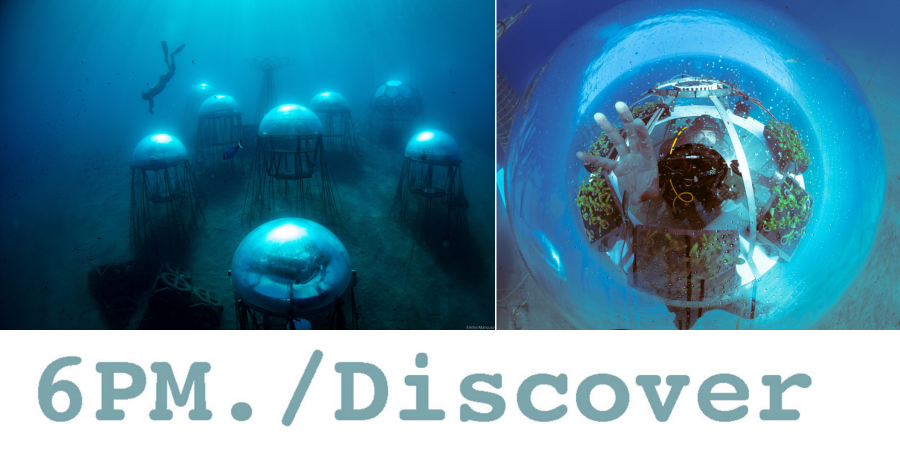
This summer, my friend Thierry Reboul (who, among other things, helped conceive the ceremonies for the Paris Olympic Games) told me about a project he was working on. As part of it, he’d been in touch with Nemo’s Garden, an underwater farm that grows plants in submerged biospheres. I haven’t had the chance to visit them in Italy yet, but I absolutely love the fact that someone came up with such an idea. Apparently, the herbs even have a delicate salty note, which sounds rather lovely.
Behind this experiment lies an issue that concerns me deeply. We’ve developed production systems that exhaust our soils, consume vast quantities of water and leave us increasingly dependent on heavily processed products. Meanwhile, we continue to waste absurd amounts of food while millions of people go hungry. We urgently need to rediscover a little common sense, and that’s precisely what we’re trying to do, on our own scale, with the Food Lab. In a region where water is scarce, we’re exploring ways to produce more efficiently with fewer resources, preserve plant varieties through a seed bank, and share what we learn with local communities. These may not be spectacular solutions, but they make a real difference.
My relationship with performance has changed a great deal over the years. For a long time, I was entirely focused on results. If I decided to redesign a room at Dar Ahlam, for example, the aim was to finish it as quickly as possible and move straight on to the next thing. Over time, I’ve learnt to slow down, to embrace imperfection and, above all, to take as much pleasure in the journey as in the destination. This year, we set our teams a rather unusual challenge: to improve one tiny detail every single day. I’m convinced that 365 small improvements over twelve months can transform a place far more profoundly than a handful of grand decisions made in a rush.
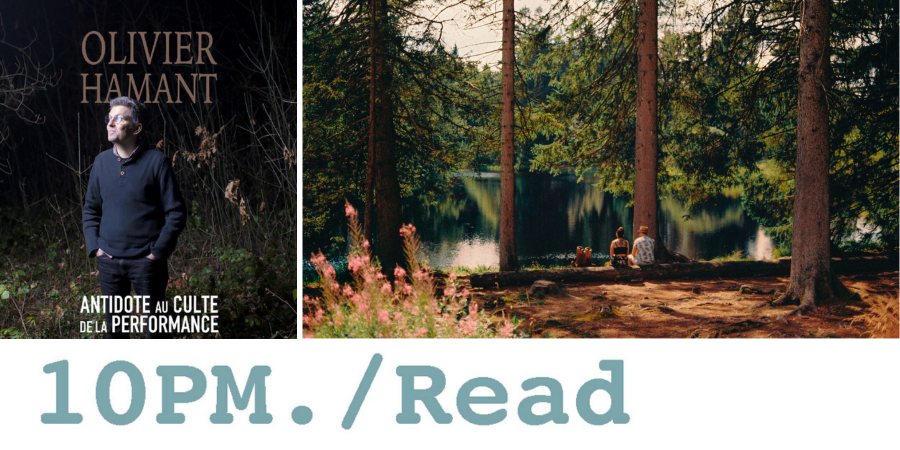
That’s why Olivier Hamant’s reflections in Antidote au culte de la performance (An Antidote to the Cult of Performance) resonate with me so strongly. This biologist champions an idea that goes against almost everything our society seems to value today: rather than constantly striving for performance, we should learn to become more robust. Living systems are slow, sometimes repetitive, even inconsistent. Yet those very qualities are what allow them to adapt, absorb shocks and endure. In a world that feels increasingly unstable, learning to put down stronger roots has become essential, even if it means moving forward a little more slowly.
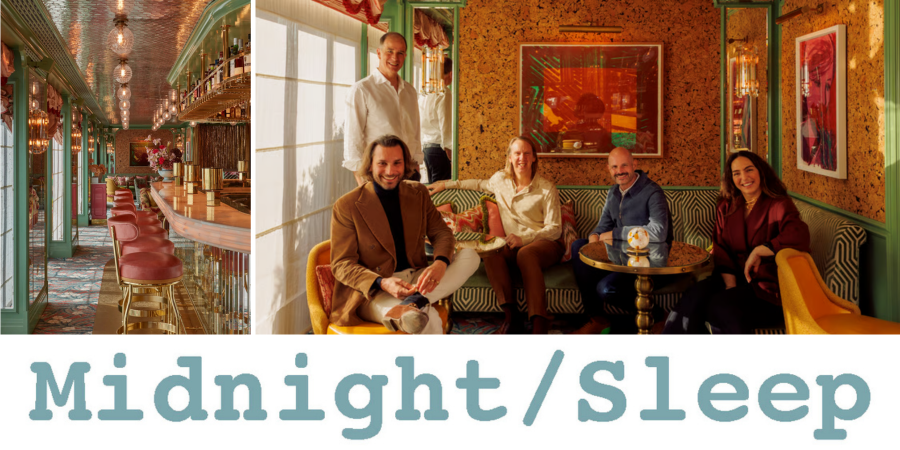
I met one of the founders of Broadwick Soho at a seminar I was hosting at Dar Ahlam. Suffice it to say, we could hardly have been more different, either in our personalities or in the hotels we run. And yet, we understood each other immediately. When you’ve worked in hospitality for long enough, you develop a fairly good instinct for recognising people who share your convictions. He made me curious to see how he managed to bring his vision to life in such a challenging environment. So I went to London, and I loved it. Not so much for the décor, but for the warmth and intelligence of the team.
In a city where recruitment is difficult, space is at a premium and logistical challenges must be a daily reality, they’ve managed to maintain an extraordinary level of care and attention.
It had been a long time since I’d encountered a team so attuned to the way each individual guest wanted to experience their stay. If we spend too much time listening to marketing departments telling us what guests supposedly want, we risk creating hotels that all look and feel the same. What matters is knowing who we are, what we want to share and how our vision belongs to the place we’re in. It’s never eccentricity for its own sake that moves people. It’s getting things just right.

> An article in Air Mail about Memory Road, our travelling journey through southern Morocco. Written by Jeanne Malle, the story is built around a belief very close to my heart: some journeys are all the more precious because they can only be experienced once.
> A four-day workshop at Dar Ahlam, designed for hoteliers who want to take a little distance from their daily work and challenge the conventions of hospitality. Through conversations and encounters, The Shift brings together a small group of professionals to rethink what makes a place truly unique.
8–12 December. For more information: theshift@wearezero.fr.
Photo Credit :
Eric Martin / William Morris Gallery / Confiture Parisienne x Fabien Vallos / Visit Sweden / Nemo’s Garden / Olivier Hamant by Laura Collard & Colin Delfosse . Boby / Broadwick Soho / Eric Martin