
You know that time is precious to me, which is why I decided to structure this monthly letter as follows: a retrospective on the past month, an encounter with a creative mind, a taste sensation, a reflection to open up new horizons, an enlightening read, and a place where the values of hospitality are those that I love and cherish. TOMO is not just a newsletter. It is a companion that transforms readers’ time into something precious and unexpected.
To find previous editions and receive future ones, click HERE.

#19
Pioneer of time,
sower of emotions
October 14th, 2026
Dear readers,
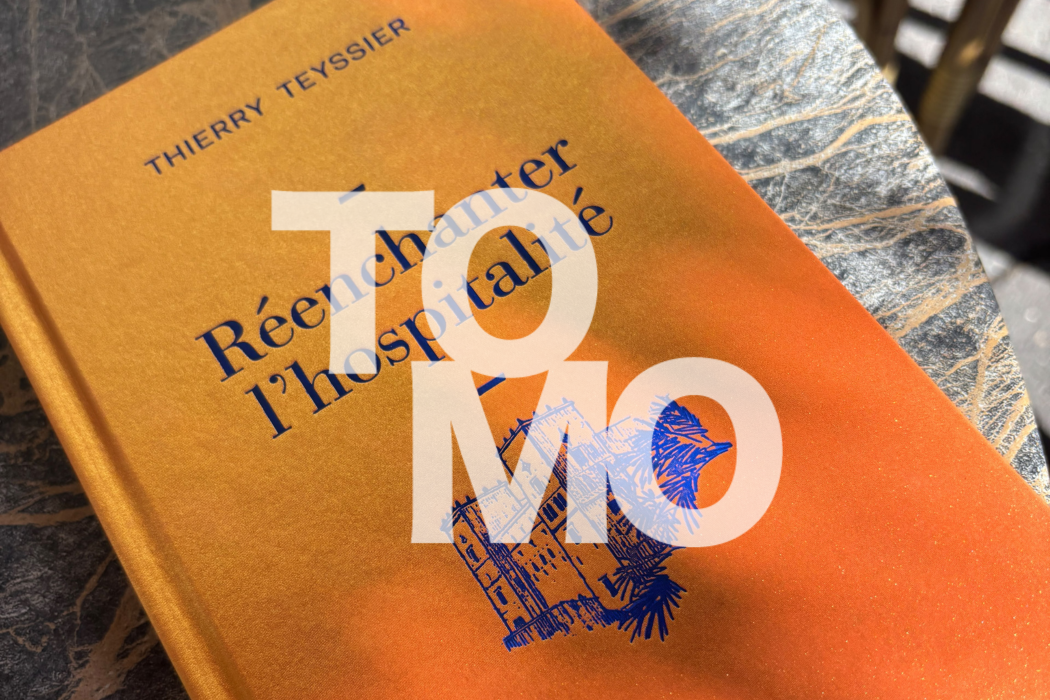
I promised I would be back with some news, and I am absolutely delighted to finally announce that my book is now available in French bookshops and on my publisher Actes Sud’s website. I felt the need to put into words what I have been doing instinctively for years. Some things come naturally to me, almost as second nature, and I have come to realise that they are not necessarily as obvious to everyone else. So I tried to give some structure to the joyful chaos that this form of sensitive hospitality we believe in can sometimes represent. Making flexibility an organisational principle inevitably involves a certain degree of disorganisation, and we are constantly walking that fine line.
This book is also part of a journey towards passing on what I have learnt, which I embarked on earlier this year. Hoteliers can be terribly isolated, and we all need to exchange ideas more often, to think about how the skills we have each developed within our own properties might benefit others and, above all, to move away from this notion of competition that the industry seems determined to impose on us. We are not rivals: in our own ways, we are all working towards the happiness of our guests. I hope this book will therefore become a tool for sharing knowledge and a foundation for the projects we have yet to develop.
I am convinced that hospitality is, ultimately, a universal subject. The moment we open our door, we are practising hospitality. Welcoming a stranger always involves an element of the unknown, and yet there is nothing more natural than bringing people together, especially in the increasingly hostile world we live in. This almost political dimension of the book was understood and embraced from the outset by my editor, Anne-Sylvie Bameule, whom I would like to thank once again for her trust and support.
The book is now yours. I hope it will encourage you to look at certain moments differently, inspire your own reflections and, perhaps, offer you a few keys to bringing a little more beauty and poetry into your everyday life.
Warmly,
Thierry
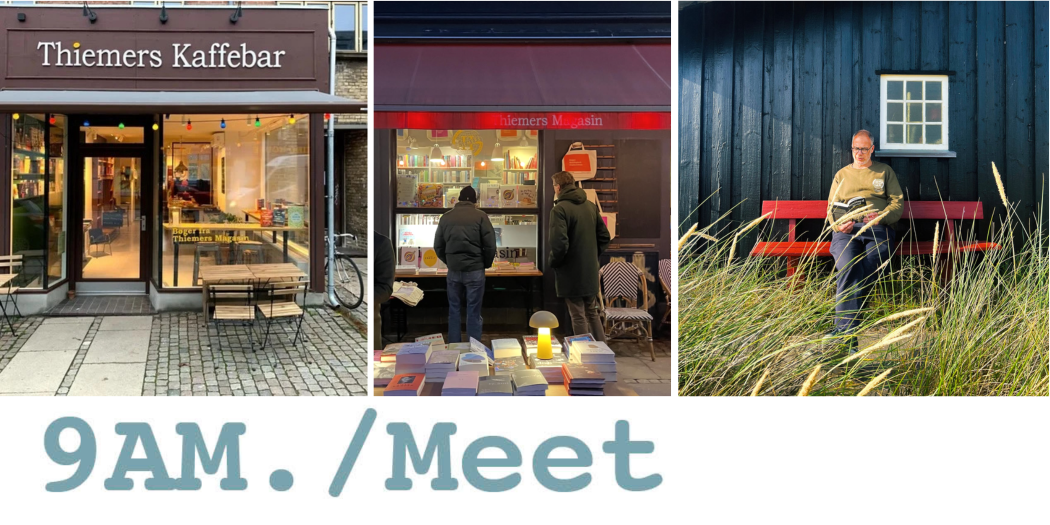
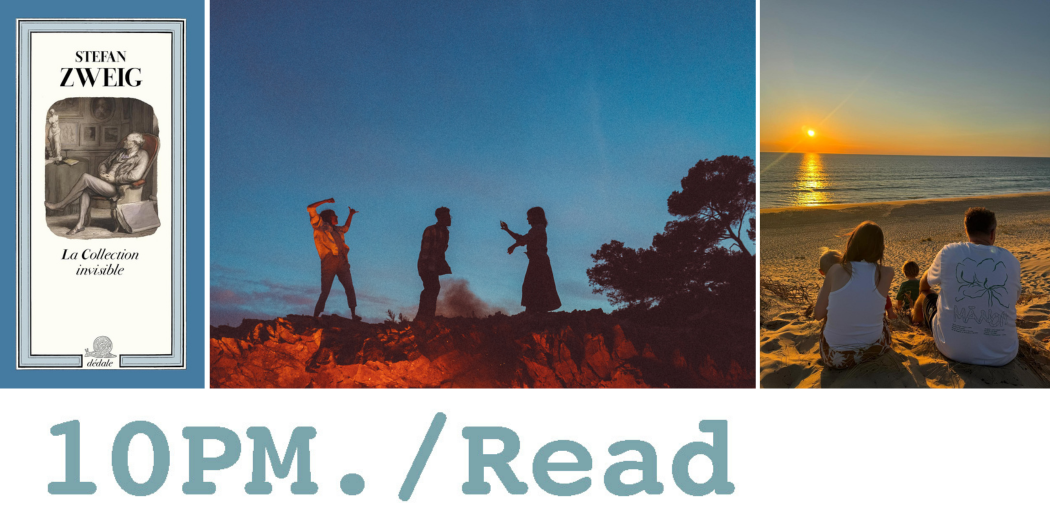
This summer, during my few days of digital detox in Copenhagen, a friend who works in hospitality told me: ‘You absolutely have to meet Michael Bjørn Nellemann.’ So I went for a coffee with him at Thiemers, his bookshop, and we spent some time putting the world to rights. I loved the way he sees books as a living material, something through which we can constantly invent new ways of bringing people together. And of course, whenever someone decides to do things a little differently, I’m immediately interested!
He sometimes opens his bookshop at night for insomniacs and, when it is closed, leaves books on tables outside for passers-by to buy using a remote payment system. A few get stolen, but far fewer than you might imagine. I was also fascinated by the philosophy behind his book club: everyone brings their own book, then they all head down to the metro and board a train on a circular route around Copenhagen. For around forty minutes, they read together in silence. If anyone asks what they are doing, there is only one permitted answer: ‘I’m reading.’ And then they return to their books. Last time, there were 70 of them! I love the simplicity with which Michael challenges conventions to touch people’s souls in unexpected ways. Books become an excuse for encounters, trust and the unexpected. And I find that rather magical.
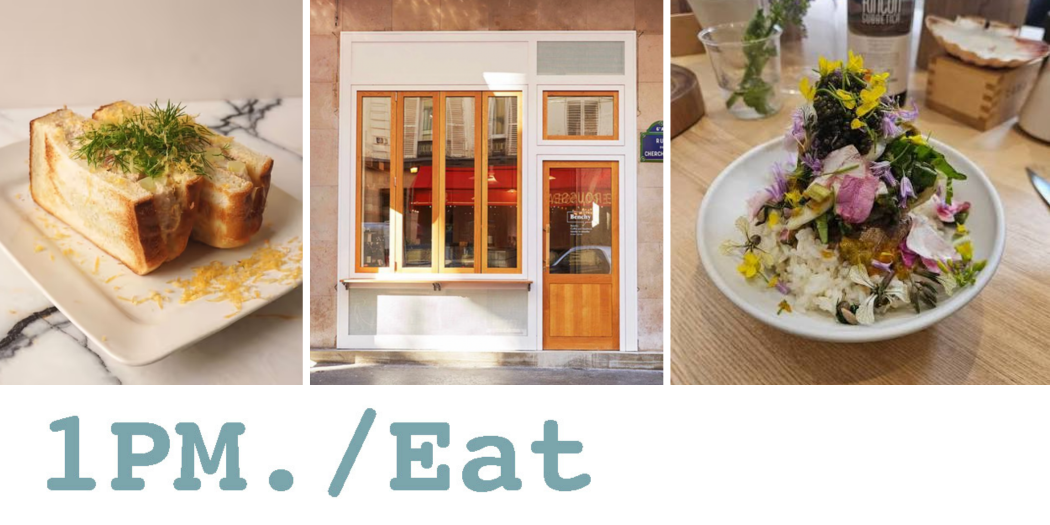
There are two Japanese places in Paris I keep going back to: Benchy and Wani. Two very different addresses, but both share the same attention to the smallest details, without ever trying too hard. Benchy makes, in my opinion, the best sandwiches in Paris. I am completely obsessed with their egg sando. Then again, whenever I arrive in Japan, one of the first things I do is buy myself one! Their matcha is divine and, as far as I am concerned, they have one of the finest pastry chefs in the capital. Recently, they were serving a heavenly little tart topped with a whole roasted, stuffed peach. And I am already looking forward to their autumn Mont Blanc, which is an absolute delight. I also love Wani, particularly for its savoury dishes, and especially its bowl of raw fish and rice, always accompanied by a multitude of little surprises. In both places, everything is simple, precise and delicious, and a few stools out on the street are all it takes to transport me somewhere else.

I recently came across a campaign that really got me thinking. To move away from traditional fundraising appeals, the American charity Comic Relief created Not Our Problem, a fake NGO aimed at everyone who believes that child poverty is… someone else’s problem. The entire campaign takes indifference to absurd lengths before, of course, offering very concrete ways to take action. I find the idea particularly relevant at a time when indifference towards others seems to be gaining ground. I see it everywhere, including in our oasis in Skoura: who cares if everyone else is running out of water, as long as there is still some left in my well? Our societies are becoming increasingly individualistic and polarised when, on the contrary, they should be becoming more humane.
On our own scale, we try to raise awareness without ever lecturing anyone. The experience we created with Olivier Darné around honey and bees, for example, allows us to highlight their essential role, but also to draw parallels between the organisation of a beehive and that of our societies. We could learn so much from them. This is also why I believe so strongly in beauty and poetry. Touching our guests’ hearts, stirring an emotion, is perhaps a way of planting a seed. Will it grow? I have no idea. But it is something we work towards every single day. We can always shrug our shoulders and say: ‘Not my problem.’ But we all live on the same planet, we are all part of the same world. So yes, it most definitely is our problem.
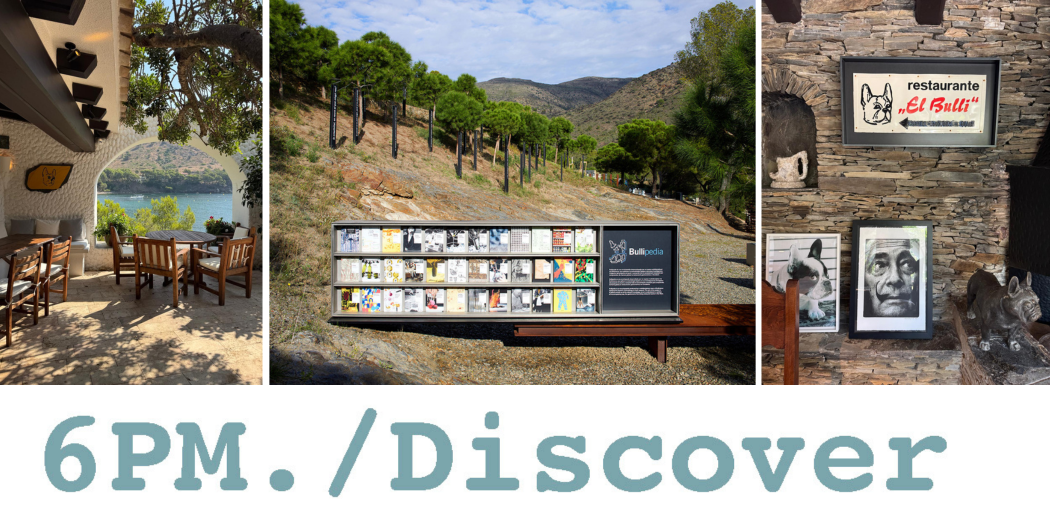
This summer, on the recommendation of a close friend, I booked tickets to visit elBulli1846, Ferran Adrià’s legendary restaurant, now transformed into a museum dedicated to creativity and innovation. I was lucky enough to meet Lluís Garcia, who joined the restaurant’s team in 1990 and is now the director general of this extraordinary research laboratory (you can find our conversation in the fourth edition of TOMO Voices). I cannot recommend a visit highly enough. My only regret is not having spent more time there! There are dozens of things I could tell you about, but three ideas particularly stayed with me.
The first is their ability to turn creativity into a genuine working method. With Sapiens, they developed an approach that involves breaking down knowledge, connecting different ideas and questioning what we think we know in order to generate new ones. I find it fascinating how they managed to give structure to something as intuitive as creativity.
The second is what they call the sixth sense. The idea that a gastronomic experience is not limited to taste, smell or sight, but can also stimulate our brains and provoke an intellectual emotion. Making people think, surprising them, challenging them, amusing them: all of this becomes a way of heightening the other senses.
Finally, I was fascinated by their work on rhythm and language. Lluís explained to me that, for a table of four, there could be as many as 700 interactions with the staff during a single meal! It gives you an idea of just how important the sequence of gestures and emotions can be, alongside this desire to create an entirely new language. I am convinced that, to bring about a genuine break with convention, you have to invent your own codes. Otherwise, you inevitably end up reproducing those that already exist.
I recently read a short story by Stefan Zweig, The Invisible Collection, about a collector who has gone blind and whose family, ruined by inflation, has gradually sold all the prints to which he devoted his life. In their place, nothing remains but worthless sheets of paper, which he continues to handle with delight, recounting the story behind each acquisition. He has lost everything, but ultimately, what has really been taken away from him?
This question resonates with my own detachment from material possessions. Outward displays of wealth have never interested me. I would infinitely rather share moments with my family, my friends and the people I love. There is a phrase I particularly like, which is also the title of a book: ‘No one can steal what I have danced.’ I think it sums up my philosophy rather well, and it is reflected in the way I travel. Twenty-five years ago, when I imagined Dar Ahlam, our experience-led approach seemed rather obscure to the hotel industry. Today, more and more travellers are looking for precisely that something else: they want to connect with a place and its community, to discover a different way of being welcomed. Ultimately, what matters to me is not what we own, but what we carry within us. No one can ever take away our emotions and memories.

The Amazon has always represented something of an ultimate dream to me. An almost inaccessible land, surrounded by an extraordinary collective imagination shaped by films, books and explorers’ tales. I loved the weeks we spent there with 700’000 heures Impact, and I am becoming increasingly interested in the Brazilian side of the rainforest. There is no doubt that this forest is under threat, and it deserves to be discovered, protected and supported.
If I were to recommend a few experiences for a first immersion, I would start with Cristalino Lodge. In addition to the main property, they have recently created a new camp with just two tents, deep in the forest. Another way to discover the Amazon would be to board one of the boats operated by Katerre Expeditions, founded by Ruy Carlos Tone, who is currently preparing a new project for May. In both cases, these are people and teams I trust, doing remarkable work to protect these territories and the communities who live there.
The Amazon is not exactly a restful destination. Your body is constantly on high alert, your usual points of reference disappear, and you do not always feel entirely comfortable with the risks surrounding you. Then, little by little, you begin to understand that nature can also be benevolent. You gradually surrender to it: swimming in the rivers, walking through the jungle, allowing yourself to be enveloped by the sounds of the night. You learn to let go and accept that you are part of the same universe. So no, it is not for everyone, nor for those seeking absolute comfort. But what a joy it is to surrender to nature and discover just how much it can give back to us!

To follow everything happening around my projects:
On 3 November, I will be speaking at the EquipHotel trade show in Paris about re-enchanting hospitality. An opportunity to continue the reflections I share in my book and to discuss the need to imagine new ways of welcoming people, ones that are more sensitive, more human and more creative.
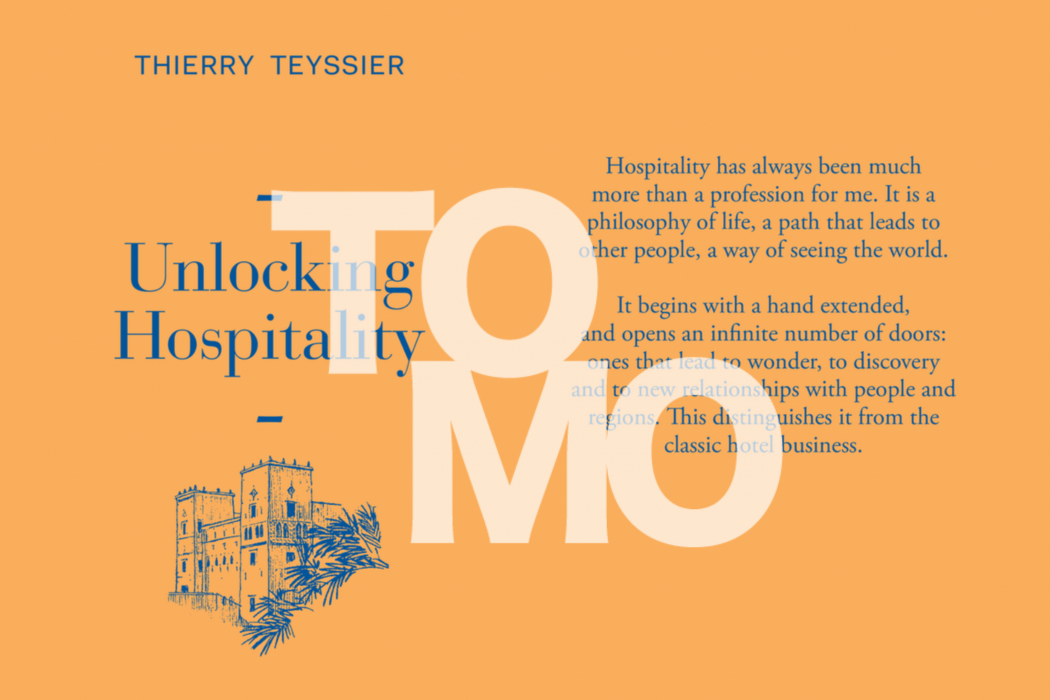
Photo Credit :
Thierry Teyssier / Thiemers / Benchy . Wani / Comic Relief / El Bulli / Dédale . Boby . Thierry Teyssier / Cristalino / Katerre / Thierry Teyssier x Actes Sud