
You know that time is precious to me, which is why I decided to structure this monthly letter as follows: a retrospective on the past month, an encounter with a creative mind, a taste sensation, a reflection to open up new horizons, an enlightening read, and a place where the values of hospitality are those that I love and cherish. TOMO is not just a newsletter. It is a companion that transforms readers’ time into something precious and unexpected.
To find previous editions and receive future ones, click HERE.

#18
Pioneer of time,
sower of emotions

September 16th, 2026
September is already well underway, and I wanted to begin this new letter with a brief look back at the summer that has just passed, shaped above all by my desire to disconnect. What I take away from it most of all is the time I managed to gain. I have always attached great importance to the way we use the hours of our lives – hence the name of my regenerative hospitality concept, 700,000 Heures Impact, inspired by the average length of a human life. More than ever, after these two months, I am convinced that the reality is not that life is short, but that we should think more carefully about how we fill it. Everything today seems designed to make our hours disappear, starting with the algorithms that keep us captive to our screens. We have the impression that our days are getting shorter, when in fact we are simply no longer seeking the enrichment that comes from meaningful leisure.
Over the past few weeks, I have kept a little notebook of everything I managed to do during this period of digital pause, and it is quite astonishing to look back at it. I had time for my family, my friends, and for myself too, as I disappeared for ten days or so in Copenhagen. I had wonderful artistic and professional encounters, far more than when I am caught up in the whirlwind of everyday life. I discovered restaurants and experienced some great emotions. I genuinely believe we should make ourselves take these breaks, and protect these moments so that we can return to the essence of what truly nourishes us.
This period of intellectual fallow has also allowed me to lay the foundations for all the new experiences that will bring the Skoura palm grove to life next year, as we celebrate Dar Ahlam’s 25th anniversary. Secret rooms within the kasbah, ephemeral experiences, artistic performances with the local community… I cannot wait to reveal a few details over the coming weeks.
Warmly,
Thierry
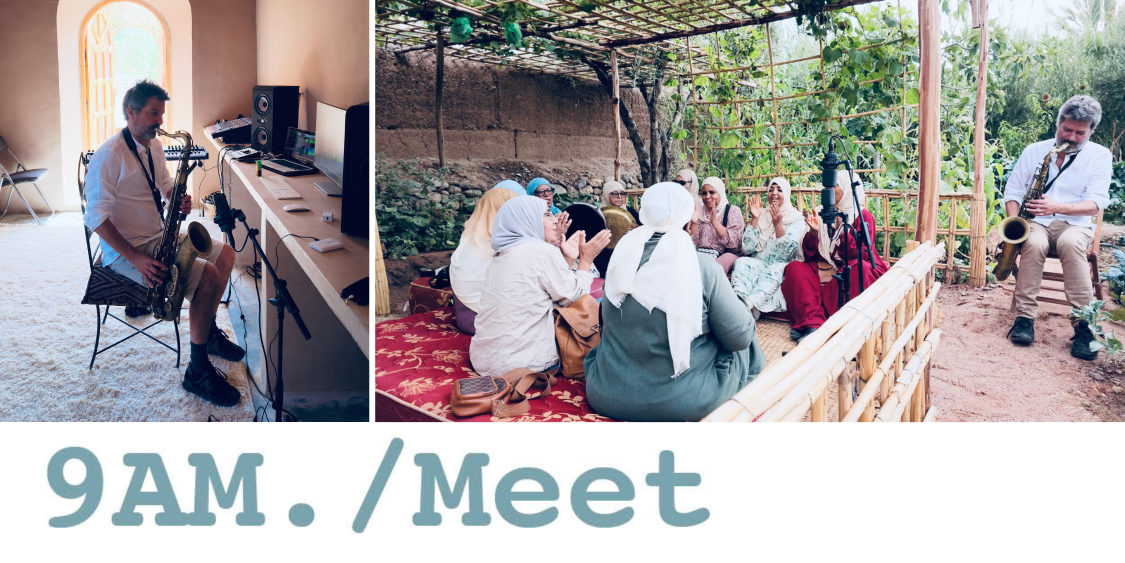
I would like to introduce you today to Laurent Bardainne, our new musician-in-residence at Dar Ahlam. I first discovered this saxophonist through Guillaume Sorge, whom I have already mentioned in TOMO, when we were looking for music for a video portrait of chef Bruno Verjus. Guillaume suggested a track by Tigre d’Eau Douce, and I immediately loved it. Behind the name is Laurent Bardainne, whom we invited to inaugurate Muusiiqaa, the House of Music at Dar Ahlam.
For a week, he drew inspiration from the palm grove, met traditional musicians and spent time with an ahwach, a group of women with whom he created a wonderful exchange. Last week, they performed together in the garden, at the foot of the kasbah. It was extraordinarily sincere and spontaneous.
Laurent has a genuine humanity about him: he is curious, he asks questions, and he truly listens. He has also begun writing a piece that he is deliberately leaving open, so that every artist who comes for a residency this year can leave their own mark on it. To me, that is exactly what Muusiiqaa should be: a living space for creation and sharing, one that both local artists and those coming from elsewhere can truly make their own.
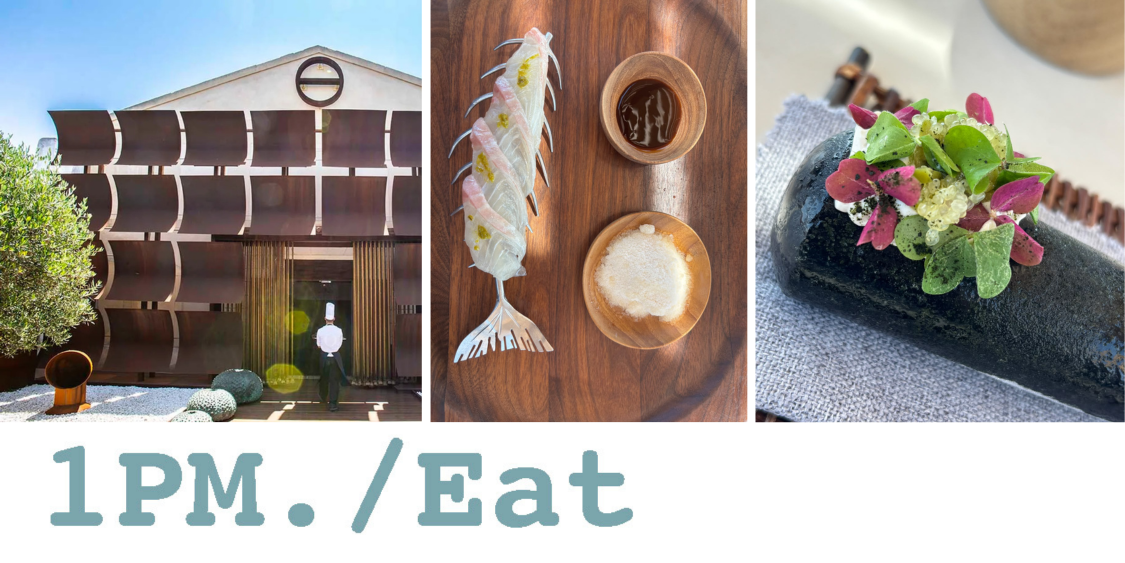
Among my summer escapes, I gave myself a gift I had been dreaming of for several years: lunch at Aponiente, the restaurant of chef Ángel León. I can now say, without hesitation, that it was the finest gastronomic experience of my life. What moved me went far beyond the quality of what we ate. The chef works with products from the sea with the conviction that everything exists in the ocean: vegetables, plants, flowers, fruit, meat, fish, seeds… I was deeply moved by the way he thanks the sea for its generosity, almost as if he were kneeling before it. He has created platforms above the salt marshes of the Guadalete, an Andalusian river, so that the first part of the meal takes place directly in contact with the water, alongside the person who raises the fish. And at the end of the meal, instead of receiving something sweet to accompany the final part of the menu, guests are given a drawing of a fish, accompanied by a short text in which the animal explains that it has had a happy life and thanks us for celebrating the end of it.
It made me think of the sixth sense Ferran Adrià used to talk about: the desire to engage the diner intellectually, so that the experience goes beyond the five senses. I actually think Aponiente could be the modern-day equivalent of what elBulli once was. What makes the difference in gastronomy in 2026 is no longer simply the balance between ingredients, sourcing, presentation and the pleasure of taste. It is about integrity. We can no longer afford to cook simply for the sake of cooking. There have to be deeply rooted convictions connected to a particular territory. I understand the desire to go elsewhere, but I believe you must always respect and listen to those who already know that territory intimately if you want to share it with others.
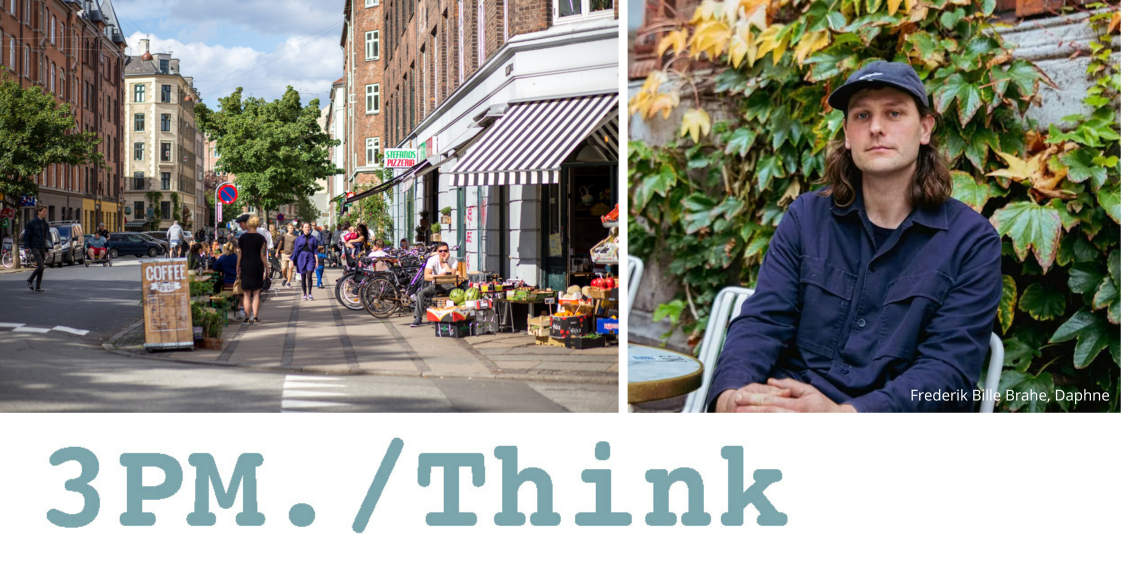
Still on the subject of gastronomy, I wanted to share something I observed during my recent stay in Copenhagen. I do not know whether the Danish capital still sets the pace in this field, but one thing is certain: there is an extraordinary amount happening there. I met several young chefs who had come from fine dining and possess all its techniques and high standards, but who have absolutely no desire to be constrained by that particular form of cooking. They want to take the complexity out of our relationship with food and return to a more joyful simplicity. If a guest wants a meal built around exceptional ingredients and technique, that is possible. But if they simply want to eat something delicious while reading a newspaper in the sunshine, that is possible too. I loved this new wave. At Daphne, for instance, the chef came and peeled his garlic while sitting in the sunshine with me during service. We talked, put the world to rights, and then he went back to check on his team in the kitchen. When I had met him two days earlier, he had made a point of introducing me to every member of his team by name. That humanity, humility and sheer pleasure in living and cooking are qualities that many chefs forget. And I find it wonderful to see this new gastronomic scene putting pleasure back at the centre.
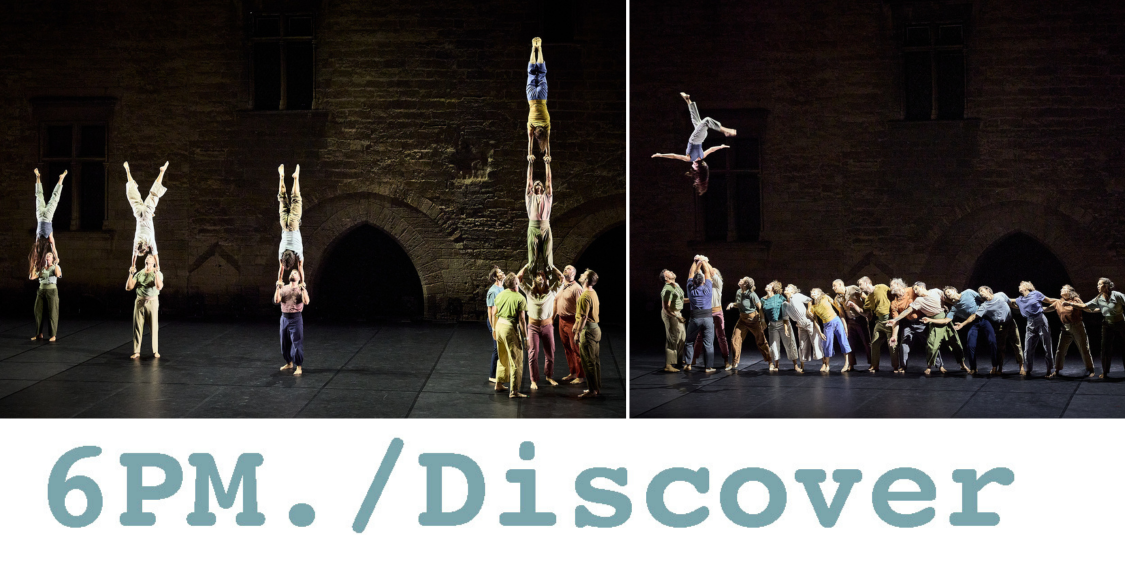
It has been a long time since a performance affected me so deeply, but I have to admit that Collectif XY absolutely floored me recently. I went to see them in Avignon, in the Cour d’honneur, a place that has been part of my life for 40 years and where I still feel a very particular emotion. The beauty of this troupe lies in the encounter between the almost Herculean strength of their bodies and the trembling lightness of their voices. There is the physical power, because there is something almost superhuman about carrying two or three people on your body. And then there is the delicacy of singing a cappella while undertaking such an intense physical effort. Like two opposing magnets, a magnetic field is created, one that contains life, hope, laughter and tears, all carried by a rhythm and an energy of extraordinary generosity. Their performance, Le Pas du Monde, is a gift, and all I can say is: run, don’t walk, to see it.
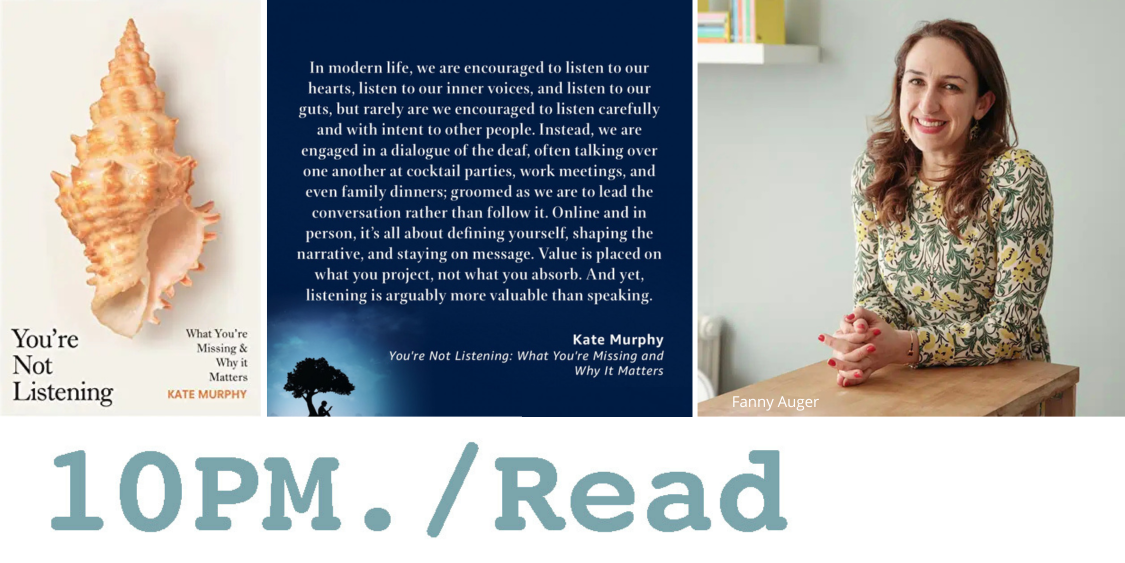
A few weeks ago, I recorded an episode with Fanny Auger for her podcast L’Art de l’attention. She recommended a book that transformed the way she thinks about conversation: You’re Not Listening: What You’re Missing and Why It Matters. It all starts with the observation attributed to Epictetus: “We have two ears and one mouth so that we can listen twice as much as we speak.” Beyond the fact that I am going to have to listen a lot, a lot, a lot to compensate for my natural tendency to talk, I found some particularly interesting lessons in this book. Listening lies at the heart of my everyday life because, to me, it is the key to hospitality: welcoming another person without asking questions, and trying to understand what they have come looking for.
I made it the theme of my back-to-school seminar with my teams at Dar Ahlam, during which Fanny led a workshop on the importance of conversation. According to her, we should always ask ourselves: what does the person I am about to speak with need to know after our conversation? What do I want them to do after our conversation? How do I want them to feel about me? It is incredibly simple, but answering these questions leaves you with no choice but to listen. If this subject interests you and you would like to explore it further, do not hesitate to write to me. I would be delighted to share other book recommendations.

Over the past few years, I have spent time in Peru. First for our 700,000 Heures Impact season in the Tarapoto region, and later to support hotelier friends with their approach to hospitality. I first discovered Tinajani three years ago. My friends had not yet signed anything, and they wanted my thoughts on the site before taking their project any further. Once there, I felt an incredibly powerful emotion: a journey back in time in the midst of a breathtaking geological landscape, at 4,000 metres above sea level, between Cusco, Lake Titicaca and the Colca Valley. They have created a sublime refuge there, with a deep respect for the surrounding communities. For the accommodation, they chose to install tents. This is not necessarily what I would have chosen, as it does not quite reflect my own perception of the place. I would have favoured restoring the historic houses and buildings, but I understand the logistical constraints, and it takes nothing away from the pleasure of being there. My most vivid memory is a walk through the national park at sunrise. I was alone with the house dog, who knew the way. He took me around his territory, and it was magical: the silence, the gentle breeze, the connection with the animal. I would never have been able to experience that if Tinajani had not existed and opened its doors to travellers. All that remains is for me to make some room in my diary to return and see how the place evolves.

To follow everything happening around my projects:
After twenty-five years spent imagining places and experiences that seek to challenge the codes of hospitality, I wanted to put into words this sensitive, poetic and profoundly human way of welcoming others that I bring to all my projects. I am delighted to announce that my book on the subject, Unlocking Hospitality, will be available very soon in bookshops, from 14 October!
In this book, I share twelve keys – sometimes invisible ones – that have always guided me. They are invitations to reinvent the way we inhabit a place, welcome others and create emotions that linger. I cannot wait to hear what you think and, I hope, to receive your first impressions as readers.
Photo Credit :
Cyrille Jerusalmi / Franck Veyrieres / Aponiente . Thierry Teyssier / Live The World . Kristina Pedersen / Christophe Raynaud De Lage / Fanny Auger par François Rouzioux / Tinajani